

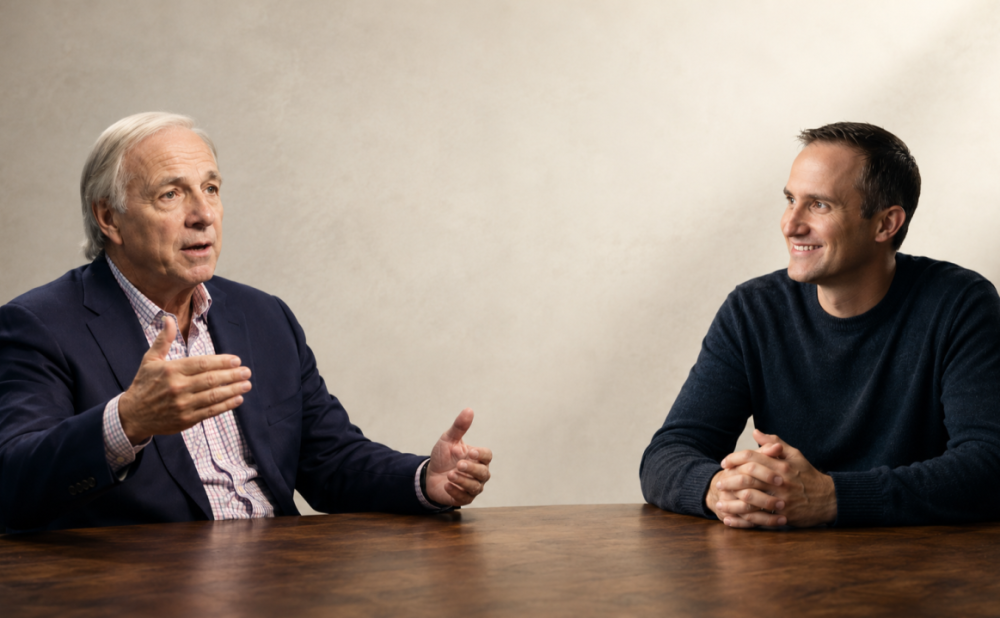
For the longest time, I have been interested in the world of investing. That interest led me to a book written by one of the most successful investors in history, Ray Dalio. In his book “Principles”, there is a line that stayed with me, which had nothing to do with markets:
“Remind yourself that it’s never harmful to at least hear an opposing point of view.”
“…at least…” Dalio isn’t asking you to agree. Just to hear it. The bar couldn’t be lower. And yet most people trip over it.
My favourite author on investing and personal finance is Morgan Housel.
I have heard him state in the past that:
“Personal finance is more personal than finance.”
“People do some crazy things with money. But no one is crazy.”
Housel’s point is that financial behaviour that looks irrational from the outside almost always makes sense on the inside. Someone refusing to invest might have watched their parents lose everything during a share market crash. Someone spending beyond their means might be running from a scarcity mindset they’ve carried for decades. Same behaviour. Completely different context.
Not crazy. Personal.
The only way to understand it is to hear it.
As a mediator, I spend my working life with people who have reached an impasse, and I find myself returning to both of these ideas again and again.
The gap in most disputes isn’t just numerical.
It’s a gap in understanding.
Most disputes drag on because each side wants to be understood before they’re willing to understand.
I’ve sat across from a defendant convinced the plaintiff was simply being stubborn‚ holding out past any sensible number, out of spite or greed. And I’ve sat across from a plaintiff who wasn’t holding out for money at all. What they wanted was for someone to say, out loud, that what happened to them was real and that it mattered. Once that happened, the number on the table looked different. It hadn’t changed. They had.
Housel’s frame translates directly: disputes are frequently more personal than the dispute. The legal issue on the table is rarely the whole story. Underneath there is usually something else‚ a betrayal, a loss of face, a version of events that needs to be acknowledged before anyone can move forward. The position that looks unreasonable from one side of the table almost always has logic from the other.
Hearing someone is not agreeing with them. It is recognising that their view makes sense from their perspective.
Dalio’s low bar is often one thing standing between a dispute that settles at mediation and one that does not. What is required is a genuine willingness to understand why the person across the table believes what they believe, given everything that brought them to the room. When that happens, something usually shifts. The numbers that looked immovable half an hour earlier start to move.
I’ve come to think listening is the most underrated skill in mediation.
Neither of these authors is in the business of dispute resolution. But they are both pointing at the same truth: the positions people hold make sense once you understand the person holding them.
In markets, failing to hear the opposing view costs you returns.
In a dispute, it costs considerably more.
The bar is just hearing. That’s all Dalio asked for. And it turns out that’s the hardest part.