

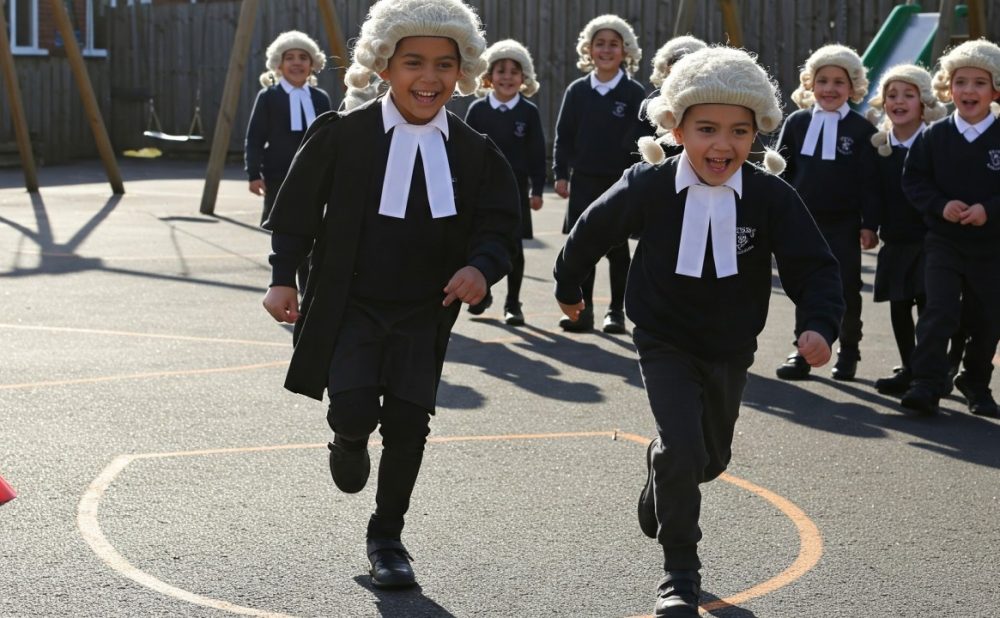
In an Australian schoolyard, a group of 10-year-olds are engaged in the timeless ritual of one-upmanship. “I can jump off the highest part of the play equipment!” declares one. “I kicked a footy further than anyone else last weekend!” boasts another. “I am the quickest in the school,” claims a third with unwavering confidence.
What happens next is remarkably instructive for legal professionals. Almost in unison comes the response that cuts through all the bluster: “Prove it.”
Those two simple words carry profound wisdom that every lawyer should remember when stepping into a mediation.
The Universal Challenge: Prove It
When a 10-year-old makes a claim in the schoolyard, their mates don’t simply accept it. They demand evidence, demonstration, proof. This instinctive response mirrors exactly what our legal system demands of lawyers acting on behalf of their clients.
A judge doesn’t care about your confidence, your reputation, or how passionately you believe in your client’s position. The court, like those schoolyard sceptics, has one simple challenge: “Prove it.”
Evidence Trumps Assertion Every Time
Watch those boys carefully. The ones who can demonstrate their claims—who can jump the furthest, who can run the fastest—gain immediate credibility. Those who offer only more talk quickly lose standing among their peers.
In mediation, lawyers who arrive armed with substantive evidence, precedents, expert opinions, and carefully constructed damage calculations gain a similar advantage. They don’t just assert that their position deserves respect; they earn that respect through demonstration.
The Danger of Unsubstantiated Claims
Perhaps the most important lesson from the schoolyard comes from observing what happens to those who can’t back up their boasts. Not only do they lose the immediate argument, but their credibility suffers for future interactions.
Similarly, lawyers who make bold claims in a mediation without the evidence to support them don’t just fail in that instance—they may damage their professional reputation and their effectiveness in future negotiations.
Practical Applications for Australian Legal Practitioners
- Prepare Your Proof: Before making any claim in mediation, ask yourself: “If challenged to prove this right now, could I?” If not, reconsider your position.
- Anticipate the Challenge: For every assertion you plan to make, have your evidence ready. Don’t wait to be asked.
- Lead with Demonstration: Instead of making claims and waiting for challenges, begin by showing your evidence. “Here’s what is known” is more potent than “Here’s what I believe.”
- Respect the Process: Remember that the other side has the same obligation to prove its claims. Don’t accept their assertions without appropriate evidence.
When Mediation Becomes Litigation
Perhaps the most compelling reason to embrace this “prove it” mentality is the reality that unsuccessful mediations often lead to court. The difference between mediation and litigation isn’t that one requires proof and the other doesn’t—it’s simply when and how that proof must be presented.
The lawyer who negotiates as if already in court—with evidence-based arguments rather than mere assertions—is positioned for success in both arenas.
Conclusion
The next time you prepare for a mediation, imagine those straightforward schoolyard challenges. Hear the voice of a skeptical 10-year-old boy asking, “Prove it.”
Because at its core, our legal system isn’t built on belief or persuasion alone—it’s built on proof. And sometimes, the most fundamental lessons about our profession come from the most unexpected places: the unforgiving, truth-seeking arena of an Australian schoolyard.